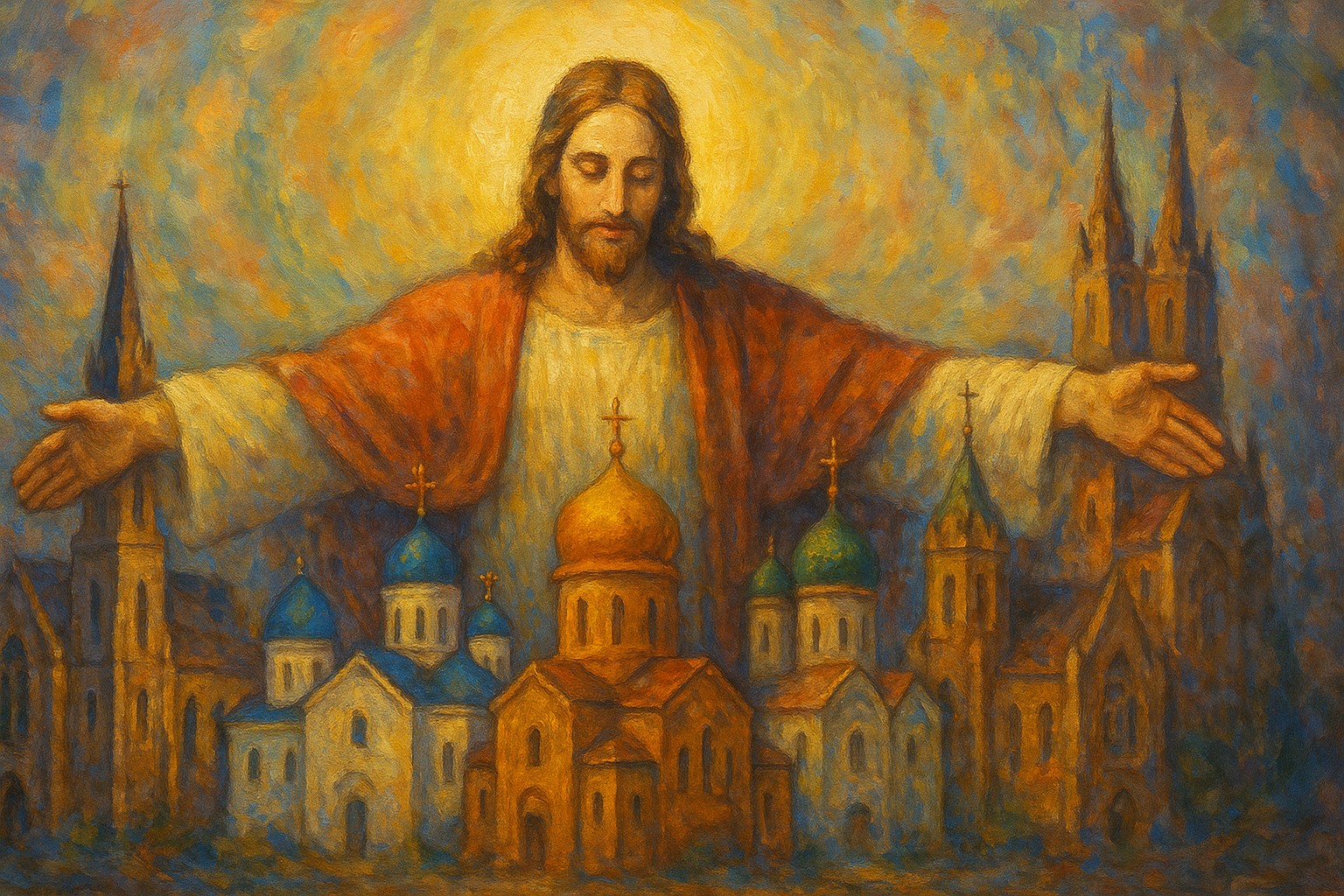
On the Incarnation
A theological masterwork exploring the divine mystery of God becoming man to restore fallen humanity.
01. The Incarnation of the Word
Doctrine of Creation, First and Second Reasons
02. The Death and Resurrection
His Death and His Rising Again
03. Refutation of Unbelief
Refutation of Jews and Gentiles
The Son is Divine
The Word of the Father is Himself divine.
All things that exist owe their being to His will and power.
Through Him, the Father gives order to creation, by Him all things are moved.
Erroneous Views of Creation Rejected
Epicurean
Claim: All things came into being of themselves.
Refutation: Creating intellect shows diversity - God the maker and Orderer of all.
Platonists
Claim: Pre-existing matter.
Refutation: Subjects God to human limitations - Creator of all material.
Gnostic Demiurge
Claim: A lesser, supernatural being, often ignorant or malevolent, creator of a "Prison".
Refutation: Rejected by scriptures (Matt 19:4-6; John 1:3).
Creation Ex Nihilo
God created everything out of nothing, demonstrating His absolute power and sovereignty over all existence.
Humanity's Special Place
"He did not barely create man, as He did all the irrational creatures on the earth, but made them after His own image, giving them a portion even of the power of His own Word; so that having as it were a kind of reflexion of the Word, and being made rational, they might be able to abide ever in blessedness."
Fall of Mankind
Transgression of God's commandment turned humanity back to their natural state. Having been created from nothing, they faced corruption into nothing over time.
Men rejected eternal things and, by the devil's counsel, turned to corruption, becoming the cause of their own death.
"For God has not only made us out of nothing; but He gave us freely, by the Grace of the Word, a life in correspondence with God. But men, having rejected things eternal, and, by counsel of the devil, turned to the things of corruption, became the cause of their own corruption in death."
The Divine Dilemma
Option 1
God must forget His spoken word by which man had incurred ruin.
Impossible
Option 2
Leave man in the current state of corruption.
Monstrous
"For it were monstrous for God, the Father of truth, to appear a liar for our profit and preservation."
Why Repentance Alone Was Insufficient
It did not alter the fallen nature
It could not undo the corruption
It failed to address God's justice
"Repentance would fail to guard the just claim of God, for He would still be none the more true."
Corruption vs. Trespass
The issue was not merely a legal offense, but a fundamental corruption (phthora) of humanity's substance.
If the offense were only a trespass (breaking a law), then simple repentance might be sufficient. But the human being began to revert to non-being (ex nihilo), like a portrait that is not simply dirty, but is decaying.
The Required Solution
Only the one who brought humanity from non-being (Creation ex nihilo) could rescue it from falling back into non-being (Corruption/Death). The Creator must become the Re-Creator.
The Solution: The Incarnation
The Word, perceiving that corruption could only be undone by death, yet being immortal, took to Himself a body capable of death.
The King Analogy
What if a king found his city being ravaged by bandits? He would not let it be destroyed, for it would be a disgrace to his honor as the founder.
He would go to the city in person, establish his presence there, and drive the enemy out.
This body, partaking of the Word who is above all, became worthy to die in place of all. Because of the Word dwelling within it, the body remained incorruptible, and corruption was stayed from all by the Grace of the Resurrection.
By offering His body unto death as a sacrifice free from all blemish, Christ accomplished what repentance alone could never achieve.
The Logic of Christ's Death
Why Not Die of Old Age or Illness?
It would have been unfitting for the Great Healer to succumb to weakness. He had to receive death from others to destroy it when it was strong.
Why Not Die in Secret?
If He died privately, critics would claim He only hid. His death had to be public and witnessed by all so the Resurrection would be incontestable.
Why the Cross?
To Accept the Curse
"Cursed is every one that hangs on a tree" (Deut. 21:23). He removed the curse from us.
To Gather All
He died with arms outstretched to embrace Jews and Gentiles, breaking the wall of partition.
To Conquer the Air
The devil is the "prince of the power of the air". By being lifted up, Christ purified the atmosphere.
Refutation of Unbelief
Refutation of the Gentiles
The Objection
They mocked the Incarnation, arguing that God (pure Spirit) would degrade Himself by entering corruptible matter.
Athanasius's Reply
The Logos is already present in the whole universe (a body). Why is it unfitting for Him to be present in a part of it (the human body)?
The Mind/Tongue Analogy: The mind uses the tongue to speak; it is not degraded.
Refutation of the Jews
Prophetic Fulfillment
- The Virgin Birth (Isaiah 7:14)
- The Divine Identity of the Messiah
- The Ignominious Death (Isaiah 53)
Athanasius's Challenge
The Law and Prophets pointed to the Word. Now that He has come, prophecy has ceased and the Temple is destroyed. If the Jews deny Christ, they must explain why divine activity in their nation stopped right after He came.
Living the Incarnation
To truly understand the Incarnation, one cannot study it purely as an intellectual problem. Holiness is required for knowledge.
"The eye of the soul, when clean, beholds the Word."
The Christian life is the laboratory where the truth of the Incarnation is confirmed.
Review Questions
Question 1
What was the original purpose of humanity?
To live in blessedness as rational beings made in God's image, reflecting the Word.
Question 2
What did humanity bring upon itself?
Corruption and death by turning away from eternal life to corruption.
Question 3
Why couldn't God just ignore sin?
It would make God appear as a liar, violating His justice and truth.
Question 4
How does Athanasius describe the Logos?
As divine, through whom all things receive being, are moved, and are ordered.