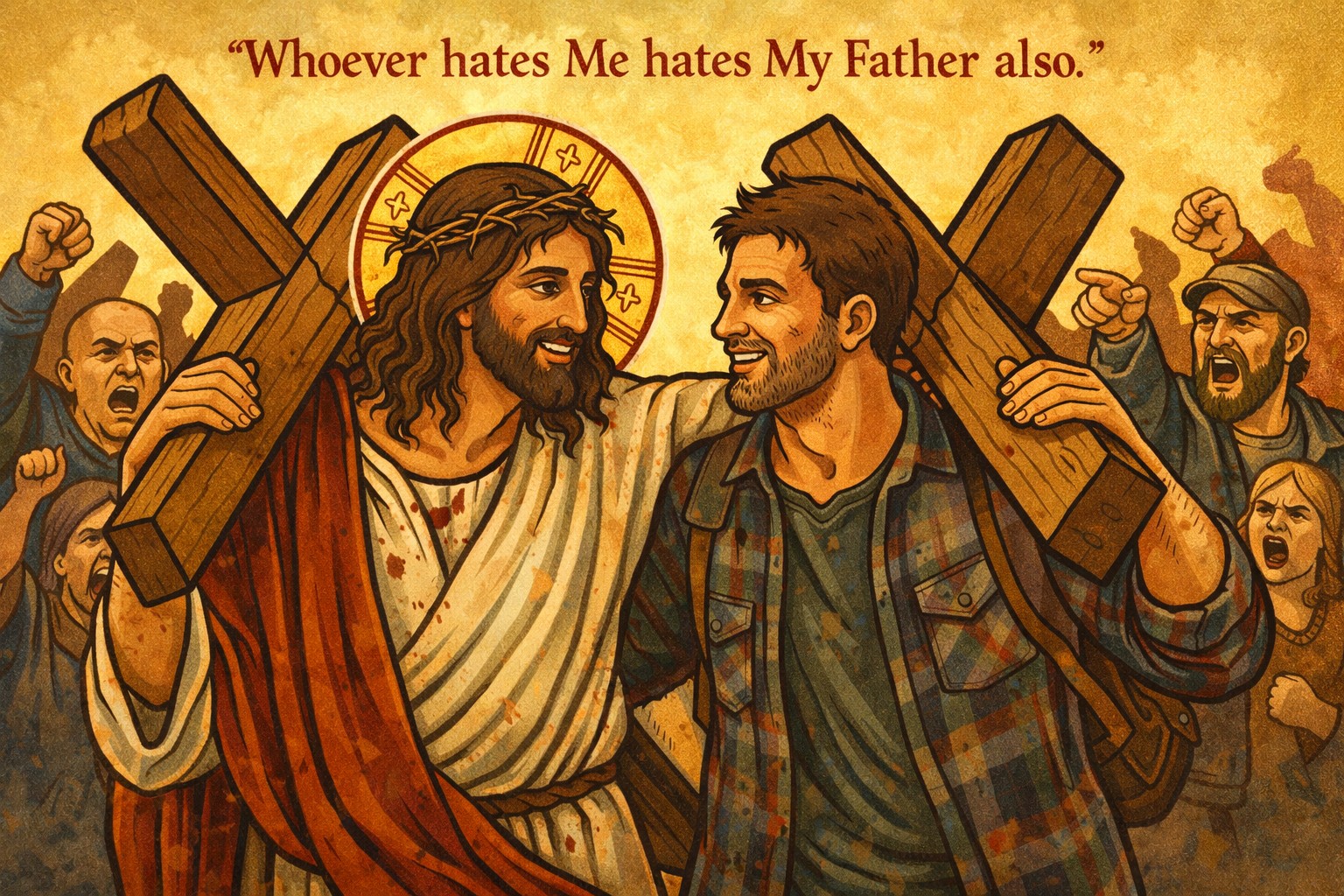
On the Knowledge of God
Growing in Grace and in the Knowledge of Our Lord
The Knowledge of God is the comprehension, awareness, and relationship humans have with the Divine Being. It is gained through personal and experiential revelation.
The Apostle Peter exhorts us:
"But grow in grace, and in the knowledge of our Lord and Savior Jesus Christ. To him be glory both now and forever. Amen." (2 Peter 3:17-18)
How Do We Know God?
God has revealed Himself progressively through the prophets, but the complete, perfect, and full revelation of God was in the person of Christ.
Through the Prophets
"God spoke in times past to the fathers by the prophets, but in these last days has spoken to us by His Son" (Hebrews 1:2)
God prepared humanity through generations of prophetic witness, gradually unveiling His nature and plan of salvation.
In the Person of Christ
"No one has seen God at any time. The only begotten Son, who is in the bosom of the Father, He has declared Him." (John 1:18)
"Declared" means He made Him fully known, provided a clear revelation, and unfolded Him. We know God in Christ.
The Light of Knowledge
"The light of the knowledge of the glory of God in the face of Jesus Christ." (2 Corinthians 4:6)
In Christ's face, we see the fullness of God's glory - not an abstract concept, but a living, radiant truth.
St. Cyril of Alexandria
"He has given us the knowledge of God the Father, and he has shown him to us in his own nature. Christ has revealed the truth to us."
Incarnational Knowledge
We know God because He became human. This knowledge is down-to-earth, practical, and not symbolic - because it involves God entering the tangible reality of human existence.
The Word Became Flesh
The Incarnational understanding of God's knowledge centers on the core Christian statement: "The Word became flesh" (John 1:14). The Incarnation of Christ revealed God directly to us and opened the way to truly know who He is.
The concept is further rooted in the phrase, "dwelt among us" (John 1:14). The term "Dwelt" implies eskenesos or shakenah (camped/made us His dwelling place), signifying God's profound desire to dwell among us and in us.
Mutual Dwelling
The Incarnation is understood as an event that directly affects all humanity, establishing a mutual dwelling between God and humanity.
"Jesus Christ the Word, who came and took flesh, He dwelt in us, and we saw His glory."
- Monday Theotokia (Church Praise)
St. Cyril of Alexandria
"The Word dwelt in us all through His body that is taken from us for us; He possessed us all in Himself so he can reconcile us with His Father."
St. Basil the Great
"He acquired mankind implanted in him and united with him, for he gathered all humanity in himself through his body..."
God Dwells Among Us
The Incarnation is not a distant historical event - it is the foundation of all Christian knowledge. God entered our tangible reality so that we might know Him not from afar, but from within.
"He possessed us all in Himself so He can reconcile us with His Father."
Participatory Knowledge
A form of knowing God rooted in unity - it is the act of knowing something because one participates and merges with it. It moves beyond external observation to an internal, experiential knowing.
Knowing from the Inside
Unlike purely scientific or intellectual knowledge, participatory knowledge is experienced from the inside. Your being is in the being of something else and merging with it - you know it from inside itself.
This knowing has feeling and taste with it; it is an experiential knowing. You know something because in some way you taste it, because it is actually coming into your being.
It is not scientific knowledge - it is experiential knowledge, knowledge that has taste and feelings with it.
Intellectual Knowledge
External observation, studying facts about God from the outside
Participatory Knowledge
Internal, experiential knowing - merging with God, tasting His presence
St. Cyril of Alexandria
"...by having been born in the flesh of a woman Christ, implanted Himself in us by an inseparable union, for we were all in Christ, and the community of human nature mounted up unto His Person."
Union and Deification
In this context, "I know Christ because I was made one with Him." This union leads to a transformation, often called deification or Theosis, where humanity shares in the divine qualities.
St. Peter refers to believers as "partakers of the divine nature" having escaped the corruption of the world (2 Peter 1:4)
St. Gregory of Nyssa
"God, in the incarnation, infused Himself into perishable humanity for this purpose, that by this communion with Deity mankind might at the same time be deified..."
"He took our body, and gave us His Holy Spirit, and made us one with Him, through His goodness."
- Friday Theotokia
"In short, he took what was ours to be his very own so that we might have all that was his."
- St. Cyril of Alexandria
Transformational Knowledge
Truly knowing God is a dynamic, non-static process that profoundly changes us. The ultimate goal is not merely living a moral life but achieving Christ-likeness - a fundamental transformation of one's being and character.
Conformed to Christ's Image
"For whom He foreknew, He also predestined to be conformed to the image of His Son, that He might be the firstborn among many brethren." (Romans 8:29)
God's plan is to shape those who know Him into the image of His Son. The person's will, thoughts, and actions are increasingly brought into alignment with the divine nature revealed in Christ.
Putting on the New Man
"And have put on the new man who is renewed in knowledge according to the image of Him who created him" (Colossians 3:10)
This transformation is described as putting off the old self and putting on the new. It is the process of sanctification - being made holy through the knowledge of God.
The Mind of Christ
"But we have the mind of Christ" (1 Corinthians 2:16)
By knowing God, believers gain spiritual insight and judgment modeled after Christ's own perfect wisdom. This is not merely intellectual - it is a fundamental reorientation of how we perceive and engage with all of reality.
We and the World
Transformational Knowledge of God is not an isolated spiritual achievement; it is inherently missional and outward-focused. A person who is genuinely transformed cannot remain static or self-contained - they are moved to serve God's creation and participate in the world's renewal.
"The Holy Spirit works in your life for the sake of others." - Father Matthew the Poor
Renewing the World
When a person is transformed and made Christ-like, they become an agent for change in the world around them.
We Are Renewed
Our changed nature acts as a catalyst for goodness and grace in our environment. Knowledge renews us first.
We Renew the World
We are renewed so we can renew the world. We participate in bringing the Kingdom of Heaven into the present moment.
A Window to Heaven
We become a window showing what heaven looks like on earth, demonstrating the possibilities of a life lived according to divine will.
For the Whole World
Christianity is not for ourselves - it is for the whole world. The grace and knowledge received are meant to overflow on others.
Active Participants in the New Creation
Through our transformation we become active participants with God in the new creation. God is using us, the unworthy, to renew His creation. Through our actions, something entirely new is generated - a foretaste of God's perfect future.
Father Matthew the Poor
"The Holy Spirit works in your life for the sake of others."
Summary
On the Knowledge of God: From Revelation to Transformation
Revelation
God reveals Himself through the prophets and fully in the person of Christ - the light of the knowledge of the glory of God.
Incarnational
We know God because He became human. The Word became flesh and dwelt among us - entering our tangible, earthly reality.
Participatory
We know God by being united with Him - an experiential, interior knowing that has taste and feeling, leading to Theosis.
Transformational
Knowing God profoundly changes us into Christ-likeness - and through our transformation, we become agents of renewal in the world.
The Journey of Knowing God
God Reveals
He speaks through prophets and fully through His Son
God Dwells
The Word becomes flesh and makes His home in us
We Participate
We are united with Christ, sharing in the divine nature
We Are Transformed
Conformed to the image of Christ - the process of Theosis
We Renew the World
Becoming windows of heaven on earth, agents of the new creation
Grace Overflows
Christianity is for the whole world - our knowledge is meant to overflow on others
"The Knowledge of God is not an isolated spiritual achievement; it is inherently missional and outward-focused. Through our transformation we become active participants with God in the new creation - a window showing what heaven looks like on earth."
- The Wisdom of the Fathers