
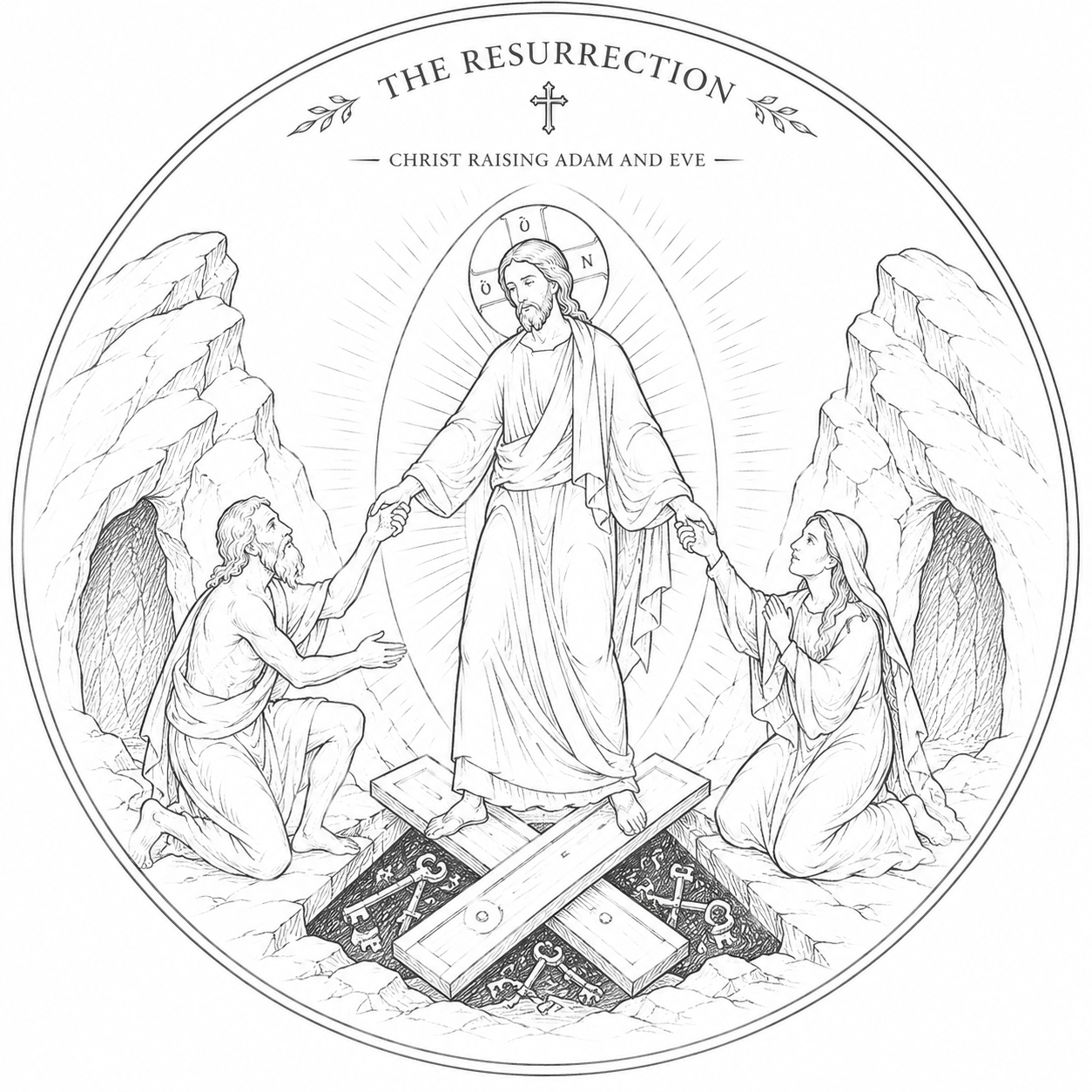
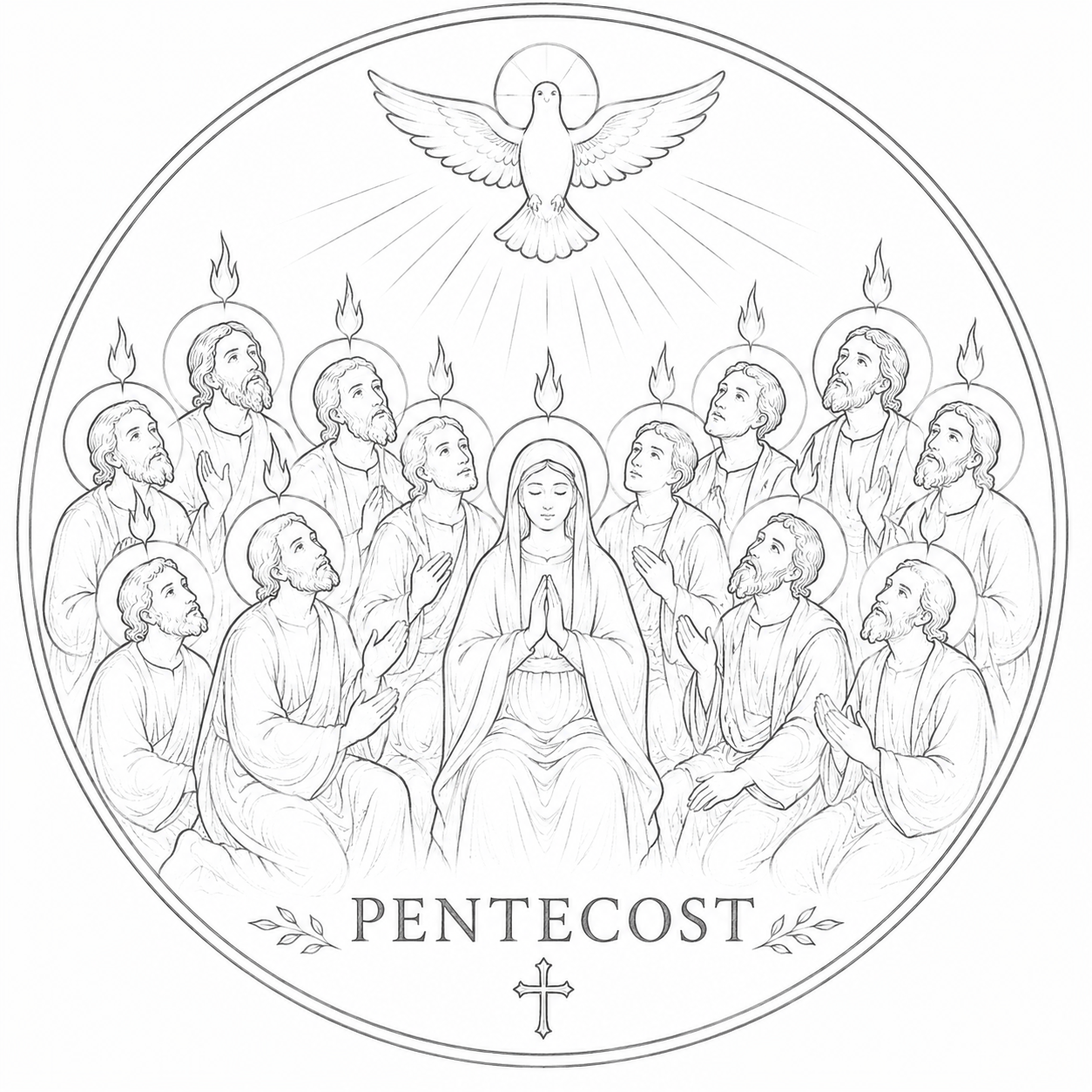
Coptic Orthodox Catechesis
The Feasts of the Lord
and the Fulfillment of Christ
Bikkurim · Shavuot · Sukkot · The Resurrection · Pentecost
A Lecture in Biblical Typology — The ancient feasts of Israel were God's own calendar: prophetic dress rehearsals enacted year after year, century after century, until the very events they foreshadowed arrived in human history.
Introduction: The Feasts as Prophecy
The ancient feasts of Israel were not merely cultural traditions or agricultural customs. They were God's own calendar—prophetic dress rehearsals, enacted year after year, century after century, until the very events they foreshadowed arrived in human history.
This lecture will trace three of those feasts—Bikkurim (Firstfruits), Shavuot (Pentecost), and Sukkot (Tabernacles)—and show how they find their complete, literal, and overwhelming fulfillment in the Resurrection of Jesus Christ, the descent of the Holy Spirit, and the transformation of the human heart.
Part One
Bikkurim — The Feast of Firstfruits
The Ancient Rite of Bikkurim
Leviticus 23:10–11
In Leviticus 23:10–11, God commanded Israel that when they entered the Promised Land, they were to bring a sheaf (omer) of the very first grain of the harvest to the priest. The timing was explicitly dictated:
He shall wave the sheaf before the Lord so it will be accepted on your behalf; the priest shall wave it on the day after the Sabbath.
The Mishnah's Description of the Bikkurim Procession
The Mishnah (Masekhet Bikkurim) describes the presentation of the firstfruits as one of the most vibrant, communal, and joyful parades in ancient Israel. It was a multi-sensory civic event designed to show profound gratitude to God.
- 1The SelectionA farmer would walk through his field and spot the very first budding wheat, grapes, figs, pomegranates, olives, dates, or barley. He would tie a red reed around it and declare: "Let this be holy as Bikkurim."
- 2The ProcessionVillages gathered into massive regional caravans to journey to Jerusalem. Leading the procession was an ox whose horns were wreathed in gold and olive branches, accompanied by a flute player.
- 3The BasketsThe rich carried their firstfruits in baskets of silver and gold; the poor used simple wicker baskets woven from peeled willow branches. Doves and pigeons fluttered from the edges of the baskets, destined for the altar.
- 4The Royal WelcomingAs they neared Jerusalem, the artisans, priests, and even the King himself would join the line, carrying their own baskets on their shoulders up to the Temple Mount while chanting Psalm 150.
- 5The Wave Offering (Tenufah)At the altar, the priest would place his hands under the farmer's basket. Together, they would wave the basket in all four cardinal directions, up and down—forming the shape of a cross in the air—symbolizing God's ownership over the entire cosmos.
- 6The ConfessionThe farmer then recited Deuteronomy 26:5: "A wandering Aramean was my father…"—recounting how God rescued them from slavery and brought them into a land flowing with milk and honey.
The Perfect Prophetic Alignment
The staggering precision of Passion Week
The Three Spiritual Meanings of Christ as Bikkurim
a. The Guarantee of the Rest of the Harvest
In ancient Israel, a farmer could not eat, sell, or bake a single grain from his new fields until the Bikkurim was offered to God. The first sheaf was the legal representative of the whole field.
b. The First That Sanctifies the Rest
If the first piece of dough is holy, the lump is also holy; and if the root is holy, the branches are too.
c. Given on Behalf of the People
"He became the firstfruits of our resurrection, so that just as He rose, we also who are of earth and dust might not remain in death, but rise from the dead after His example."
"For He offered Himself as the firstfruits of our nature, taking it up with Him into heaven, and presenting it to the Father as a pledge that the whole lump would follow after the firstfruits."
Part Two
Christ as the "First" — Three Biblical Titles
Christ as the "First" (Protos / Aparchē)
When Scripture calls Jesus the "First," it uses terms that denote both temporal order (He is before all things) and ultimate supremacy (He is the most important).
But Christ has indeed been raised from the dead, the firstfruits of those who have fallen asleep.
Christ as the "Leader" / "Pioneer" (Archēgos)
Pioneer · Leader · Author · Captain · Originator
In bringing many sons and daughters to glory, it was fitting that God… should make the pioneer (archēgos) of their salvation perfect through what he suffered.
You killed the author/leader (archēgos) of life, but God raised him from the dead.
"He descended into the depths of death not as one compelled but as one who is free, so that He might open for us a way through, leading us by the hand through the pit of death into the light of the resurrection. He is the Pioneer who has gone before so that wherever He is, we also may be."
Part Three
Shavuot (Pentecost) — The Climax of the Harvest
Sinai vs. Jerusalem: A Perfect Mirror
Same feast · Same day · Same number · Opposite result
According to ancient rabbinic tradition, when God spoke at Sinai, His voice split into seventy sparks of fire—a tongue of flame to each of the seventy nations. When the Holy Spirit descended in Jerusalem, those exact traditions came to life:
| Sinai Pentecost (Exodus 19–20) | Jerusalem Pentecost (Acts 2) | |
|---|---|---|
| The Sound | A thick cloud with a shattering trumpet blast | A sudden roaring sound like a rushing violent wind |
| The Sight | The entire mountain burned with divine fire | Divided tongues of fire resting on each one present |
| The Speech | God's voice split so every nation could understand | The disciples spoke so every visitor understood |
| The Result | The letter of the law brought judgment; 3,000 died (Ex. 32:28) | The Spirit brought life to the heart; 3,000 souls were saved (Acts 2:41) |
"At Sinai, the Law was given by fire and the people fled trembling from the foot of the mountain. At Jerusalem, fire was given again—but this time it rested upon men and they were not consumed. Instead, they were filled. This is the difference between the covenant of fear and the covenant of love."
The Great Prophecies of Pentecost
The prophets knew that receiving commandments at Sinai was not the final destination. They foretold a day when the power that shook the mountain would enter the human heart and write the commandment within it.
Ezekiel 36:26–27 — The Heart Transplant
I will give you a new heart and put a new spirit in you; I will remove from you your heart of stone and give you a heart of flesh. And I will put my Spirit in you and move you to follow my decrees…
Ezekiel uses the ultimate Pentecost contrast: Stone vs. Flesh. God replaces the stone tablets of Sinai with a soft, living heart.
Jeremiah 31:33 — The Internalized Torah
This is the covenant I will make with the people of Israel after that time, declares the Lord. I will put my law in their minds and write it on their hearts.
Instead of engraving rules on external stone blocks, the Holy Spirit becomes the internal writer, carving the character of Christ directly onto our heart tissue.
Part Four
Sukkot (Feast of Tabernacles) — Light and Water
The Pillars of Light
John 8:12 — "I am the light of the world"
Four massive, 75-foot-tall golden lampstands (menorahs) were lit in the Temple Court of the Women every night of Sukkot. Their combined light illuminated every courtyard in Jerusalem. It was in front of those blazing pillars that Christ stood and declared:
I am the light of the world. Whoever follows me will never walk in darkness, but will have the light of life.
The Pouring of Water — Nisuch HaMayim
John 7:37–38
Every morning of the feast, the High Priest led a joyful procession from the Pool of Siloam, filled a golden pitcher with water, and poured it onto the Temple altar while the people prayed for the ultimate outpouring of the Holy Spirit. On the last and greatest day of this feast, Christ stood up and cried out:
Let anyone who is thirsty come to me and drink. Whoever believes in me, as Scripture has said, rivers of living water will flow from within them.
Romans 5:5 and the Softening of the Soil
Ekkechutai — poured out in lavish, overwhelming floods
And hope does not put us to shame, because God's love has been poured out into our hearts through the Holy Spirit, who has been given to us.
The Greek word St. Paul uses for "poured out" (ekkechutai) is extraordinarily intense—it means to be spilled out in lavish, overwhelming floods, exactly as the water libation was poured onto the altar. This single word ties the Temple rite directly to the inner life of the believer.
- 1The Hardened Soil (The Natural Heart)Like uncultivated, baked earth under a desert sun, the human heart apart from grace is hard, compacted, and impenetrable. Truth bounces off it; love cannot root in it (Ezekiel 36:26).
- 2The Spilling (Romans 5:5)The Holy Spirit is poured out not as a sparse drizzle but as a flood of divine Love. This is the ultimate fulfillment of the Temple's water rite.
- 3The Softening and SaturationAs the water of the Spirit saturates the deep, hidden cracks of our brokenness, the hardened soil dissolves. The rigid crust of the heart gives way to vulnerability and warmth.
- 4The New CreationNow that the soil is soft and malleable, the Potter can shape us into the image of Christ. The heart is no longer a stone tablet keeping score, but a living garden producing the fruits of the Spirit.
"The Holy Spirit is the divine rain that falls upon the desert of the human heart. Without Him, the heart remains hard clay, unable to receive the seed of the Word. But when He descends in His fullness, the soil cracks open, the roots of love find their depth, and the soul begins to blossom into the likeness of its Creator."
Conclusion: The God Who Plans
These feasts were given to Israel over 1,400 years before Christ walked the earth. They were enacted every single year in meticulous liturgical detail—and then, in the fullness of time, the very events they depicted arrived on the exact right days.
This is not the work of coincidence or symbolic interpretation read back into history. This is the handiwork of a God who exists outside of time and who wove the pattern of redemption into the fabric of creation before a single prophecy was spoken.
For as in Adam all die, so in Christ all will be made alive. But each in turn: Christ, the firstfruits; then, when he comes, those who belong to him.
"Let us not then be unbelieving when we hear that Christ is the firstfruits of them that sleep. For the firstfruits are the beginning of the harvest, and the harvest is nothing other than the gathering of all those who believe. He has entered into life before us, that we might follow after Him without fear."
Appendix: Key Terms Reference